How Spaced Repetition Works (and Why Vocabulary Sticks)
Spaced repetition schedules reviews right before you forget, moving words into long-term memory. Here's how the science works and how to use it.
TL;DR — Spaced repetition schedules each review for the moment just before you would forget a word. Every time you recall it successfully, the next review is pushed further into the future. This works with the way memory naturally decays instead of against it, so you remember more vocabulary in far less total study time than cramming.
What is spaced repetition?
Spaced repetition is a study technique that spreads your reviews out over increasing intervals of time. Instead of seeing a new word ten times in one sitting, you see it today, then in two days, then in five, then in two weeks — each time only when you're on the verge of forgetting it.
That timing is the whole trick. A review is most valuable at the edge of forgetting: too early and you waste effort on something you already know; too late and the memory is gone and you're relearning from scratch. Spaced repetition aims for the sweet spot in between.
Why does it work? The forgetting curve
In the 1880s, psychologist Hermann Ebbinghaus measured how quickly we forget newly learned information and plotted it as the forgetting curve — a steep drop-off that flattens over time. His key follow-up finding was just as important: each time you successfully review something, the curve gets shallower. You forget more slowly after every recall.
Spaced repetition exploits this directly. By reviewing right as the curve approaches the forgetting threshold, each repetition resets the curve and flattens it further. After a handful of well-timed reviews, a word that you'd have forgotten in a day now lasts months.
Is spaced repetition better than cramming?
For long-term memory, yes — and it isn't close. Cramming (massed practice) produces a strong but fragile memory that fades within days. Spaced practice produces a durable memory for less total study time. This is one of the most robust findings in learning science, replicated across more than a century of studies on the spacing effect.
The catch is that spaced repetition feels harder in the moment. Cramming feels productive because recall is easy when everything is fresh. Spaced reviews feel effortful precisely because you've started to forget — and that effort, called desirable difficulty, is what strengthens the memory.
How to use spaced repetition for vocabulary
You don't need to calculate intervals by hand — that's what a spaced-repetition algorithm does for you. But a few habits make it dramatically more effective:
- Add words at a steady pace. Start around 10 new words a day and adjust. Reviews accumulate, so your real limit is how many reviews you can sustain, not how many cards you add.
- Review every day. Short, daily sessions beat long, occasional ones. Missing days lets the curve drop past the threshold and turns reviews into relearning.
- Be honest when you rate recall. Marking a word "easy" when you actually struggled corrupts the schedule. The algorithm can only time the next review well if your feedback is accurate.
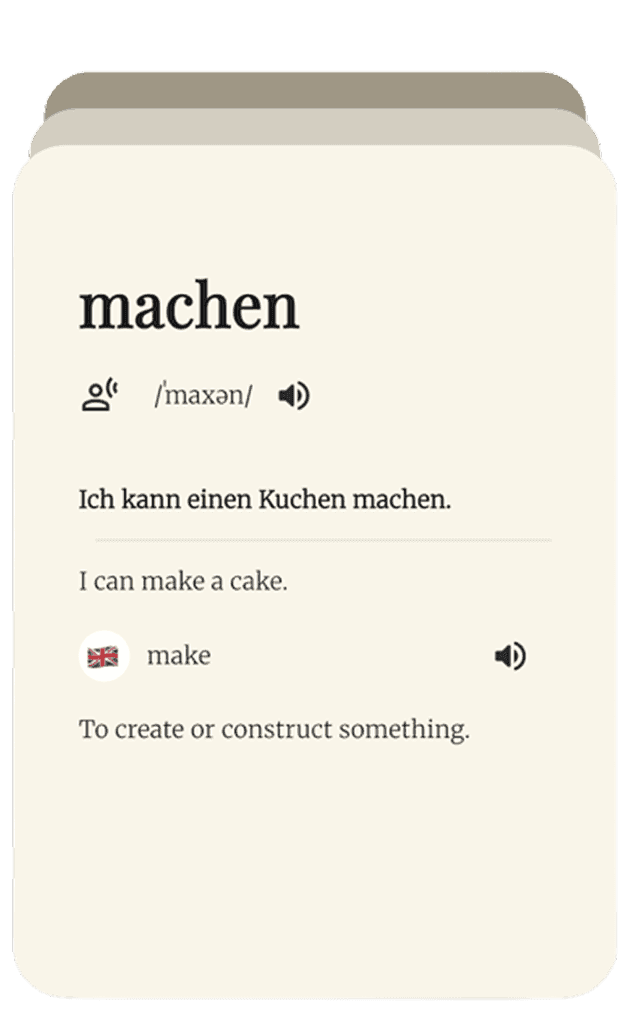
- Learn words in context. Pair each word with an example sentence and a pronunciation. Richer memories are easier to retrieve.
Key takeaways
- Spaced repetition times reviews for just before you forget, flattening the forgetting curve.
- It produces longer-lasting memory than cramming, for less total study time.
- A steady daily habit and honest self-rating matter more than any single setting.
Let an app handle the scheduling
Tracking intervals for hundreds of words is exactly the kind of bookkeeping software should do. Lingufy builds spaced repetition into everyday vocabulary practice — it schedules each word for the right moment, works fully offline, and keeps your reviews moving even when you only have a minute on your phone.
If you're choosing a tool, see our guide to the best offline vocabulary apps in 2026. And if you're learning a specific language, our German vocabulary guide shows how to combine spaced repetition with smart word selection.
Frequently asked questions
- What is spaced repetition?
- Spaced repetition is a learning technique that schedules reviews of information at increasing intervals, timed to just before you would forget it. Each successful recall strengthens the memory and pushes the next review further out, which moves vocabulary into long-term memory efficiently.
- Is spaced repetition better than cramming?
- Yes. Cramming produces strong short-term recall that fades within days, while spaced repetition produces durable long-term memory for far less total study time. Decades of research on the spacing effect consistently favor distributed practice over massed practice.
- How many words can I learn per day with spaced repetition?
- Most learners comfortably add 10–20 new words a day. Because reviews accumulate, the sustainable rate depends more on how many reviews you can keep up with than on how many new cards you add. Starting at 10/day and adjusting is a reliable approach.
Related articles
How to Memorize Vocabulary Fast (and Actually Remember It)
Rereading and highlighting feel productive but barely work — here's what actually helps vocabulary stick, according to how memory really works.

How to Learn IELTS Vocabulary (for Band 7 and Above)
IELTS tests range and accuracy, not rare words. What to study, in what order, and how to reach Band 7 vocabulary before test day.