Lingufy vs Anki: Which Vocabulary App Is Better in 2026?
Lingufy vs Anki compared: spaced repetition, offline support, setup, content, and price. Which vocabulary app fits you — and the best Anki alternative for words.
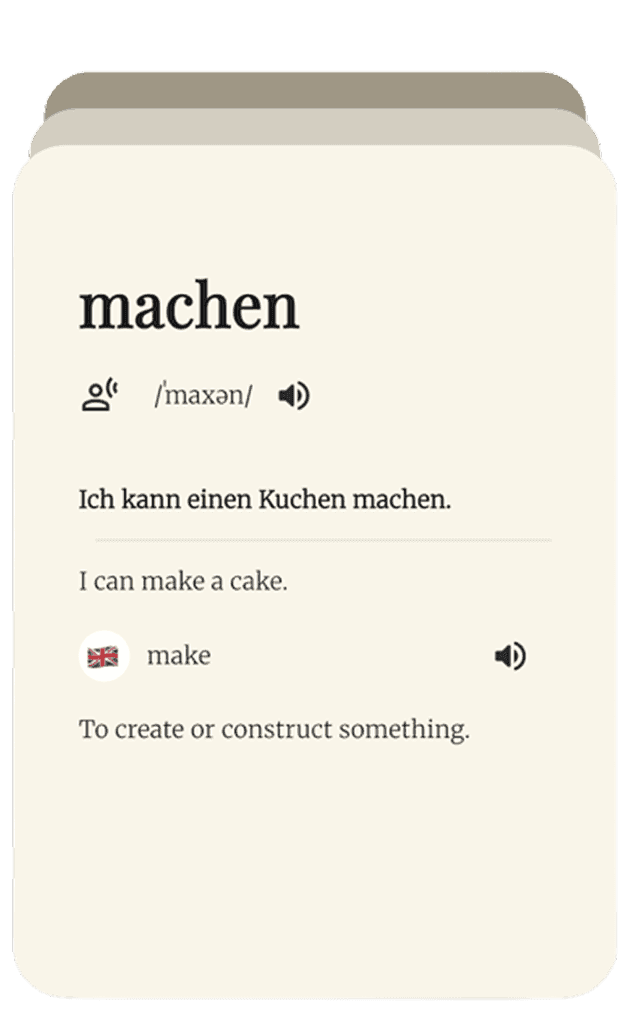
TL;DR — Both Lingufy and Anki use real, on-device spaced repetition and both work fully offline. The difference is who they're for. Anki is an infinitely customizable, deck-building power tool with a steep setup curve. Lingufy is a ready-to-go vocabulary app: 5000+ curated words per language, examples, pronunciations, and home-screen widgets — no deck-building required. Pick Anki if you want total control and enjoy configuring it; pick Lingufy if you want to start learning vocabulary in under a minute.
Lingufy vs Anki at a glance
| Lingufy | Anki | |
|---|---|---|
| Spaced repetition | Yes (on-device) | Yes (on-device, SM-2/FSRS) |
| Works fully offline | Yes | Yes |
| Content included | 5000+ curated words per language | None — you build or import decks |
| Setup time | Under a minute | Hours to tune well |
| Examples & pronunciations | Built in | Only if your deck has them |
| Home-screen widgets | Yes (iOS & Android) | No |
| Apple Watch / Wear OS | Yes | No |
| Price | Free | Free (Android/desktop); paid iOS app |
| Best for | Ready-made vocabulary, offline-first | Power users who want full control |
Where Anki wins
Anki is the most flexible memorization tool ever made. Because every card is yours, you can study anything — medical terms, legal vocabulary, a custom frequency list, image-occlusion diagrams. Its scheduling (now with the modern FSRS algorithm) is best-in-class, and the desktop app, AnkiWeb sync, and add-on ecosystem give power users near-limitless control. If you already love tinkering with study systems, nothing matches it.
The cost of that power is setup. A good Anki deck has to be found, vetted, or built card by card. The interface is utilitarian, the iOS app is a one-time paid purchase, and a beginner can easily spend more time configuring Anki than studying. Many people bounce off it for exactly this reason.
Where Lingufy wins
Lingufy is purpose-built for one job: building vocabulary in a real language, fast. You pick a language and immediately get 5000+ high-frequency words with translations, example sentences, and pronunciations — all stored on-device so everything works in airplane mode, including the spaced-repetition scheduling. There is no deck to build and nothing to configure.
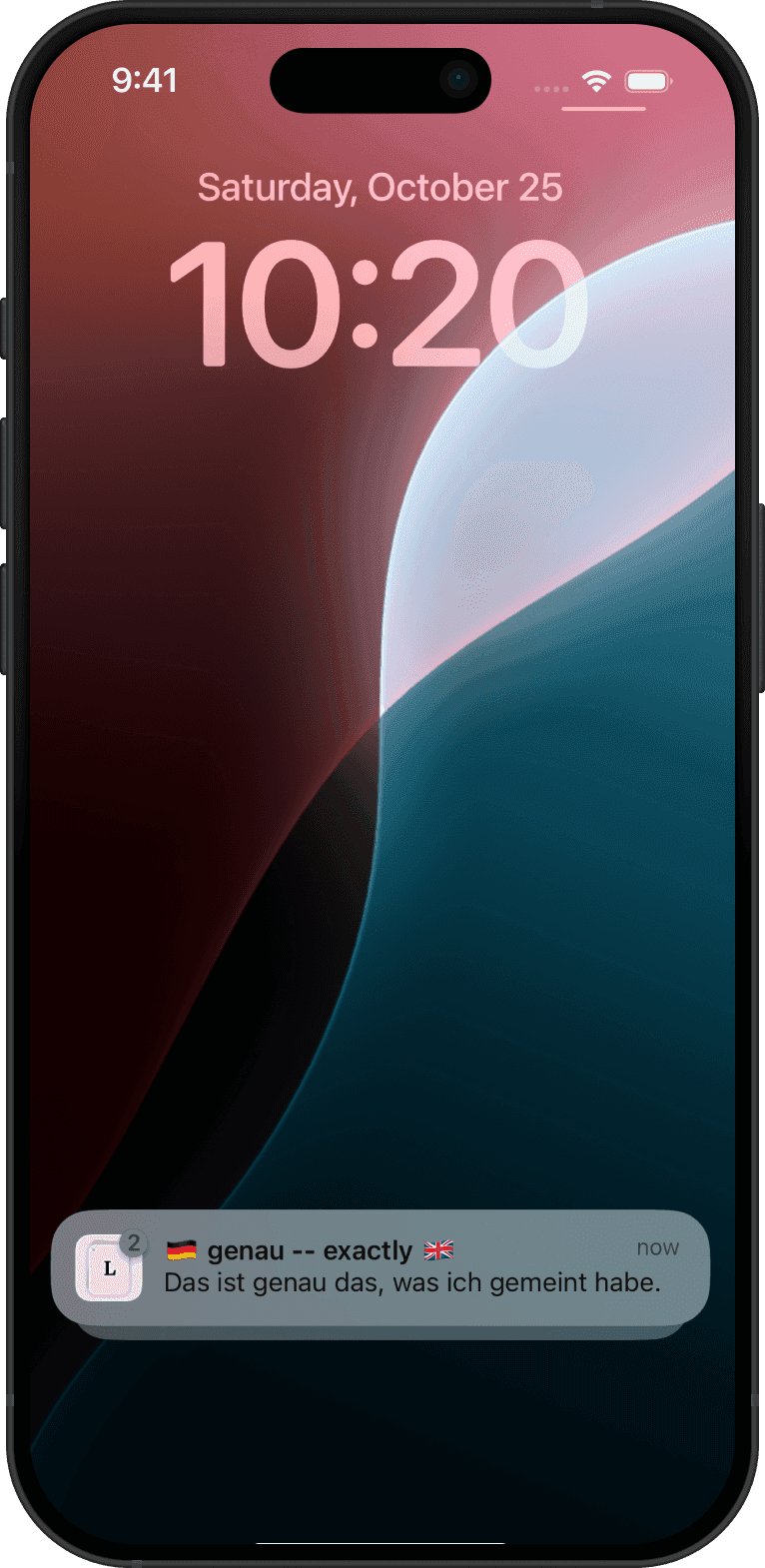
It also meets you outside the app. Home-screen widgets surface a new word at a glance, and your deck syncs to Apple Watch and Wear OS so you can review on your wrist. For most learners who simply want to learn the words — not engineer a study system — that out-of-the-box completeness is the whole point.
Looking for an Anki alternative?
If you came here searching for an Anki alternative, the usual reason is one of these: Anki felt too complex, you didn't want to hunt for a good deck, or you wanted examples, audio, and a friendlier interface without giving up real spaced repetition. Lingufy covers exactly that gap — the same proven memory science, with the curation and polish done for you. You keep the offline-first, scientifically-scheduled reviews; you skip the setup.
Which should you choose?
- Choose Anki if you want maximum control, study niche or custom material, and enjoy building and tuning your own system.
- Choose Lingufy if you want curated vocabulary for a specific language, examples and audio included, widgets and watch support, and to start in under a minute.
Many learners actually use both: Anki for bespoke decks and Lingufy as their daily, zero-friction vocabulary driver. Both respect the one principle that matters most — reviewing words right before you'd forget them. New to that idea? Start with how spaced repetition works, then try Lingufy free.
Frequently asked questions
- Is Lingufy a good Anki alternative?
- Yes, especially if Anki felt too complex. Lingufy offers the same on-device spaced repetition Anki is known for, but with 5000+ curated words per language, built-in examples and pronunciations, and home-screen widgets — so there's no deck-building or configuration. You keep the proven memory science and skip the setup.
- Do both Lingufy and Anki work offline?
- Yes. Both store content on-device and compute their spaced-repetition scheduling locally, so they work fully offline, including in airplane mode. This is unusual — most mainstream language apps need a connection for full functionality.
- Is Lingufy or Anki easier for beginners?
- Lingufy is easier to start with: you pick a language and begin studying curated vocabulary in under a minute. Anki is more powerful but requires finding or building a deck and tuning settings, which can take hours before you study a single word.
Related articles
Lingufy vs Duolingo: Which Builds Vocabulary Faster?
Duolingo is a gamified course; Lingufy is a dedicated vocabulary engine with spaced repetition that works offline. Here's which fits your goal.

Lingufy vs Memrise: Vocabulary App Comparison (2026)
Memrise bets on native-speaker video; Lingufy is offline-first with spaced repetition and widgets. Here's how the two vocabulary apps compare.