Lingufy vs Duolingo: Which Builds Vocabulary Faster?
Lingufy vs Duolingo compared for vocabulary: spaced repetition, offline use, retention, and price. Which app makes words actually stick — and a focused Duolingo alternative.
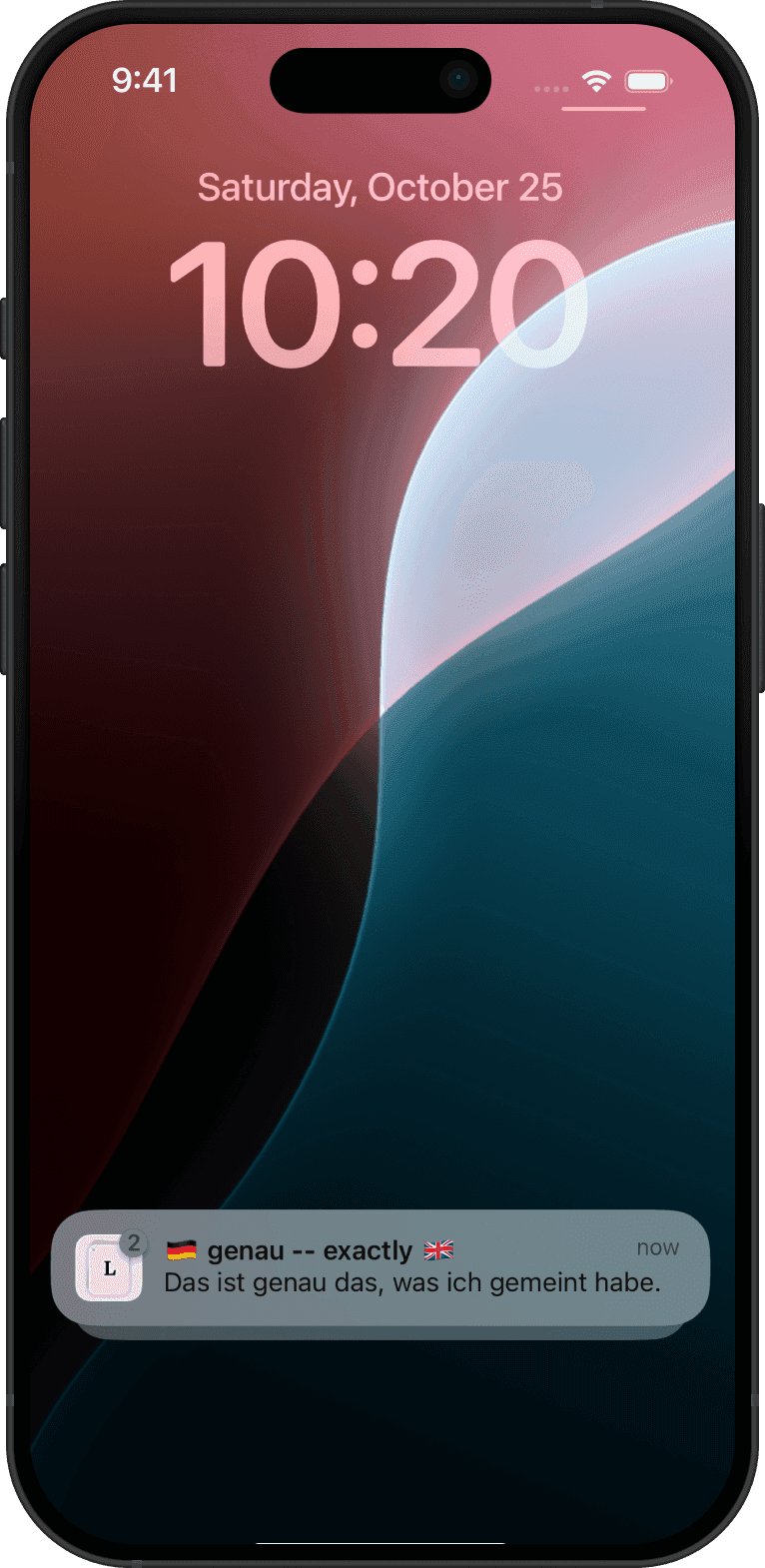
TL;DR — Duolingo and Lingufy solve different problems. Duolingo is a gamified, course-based app that teaches a bit of everything — grammar, listening, reading — through short lessons. Lingufy is a dedicated vocabulary engine: it uses spaced repetition to push thousands of words into long-term memory and works fully offline. If your goal is specifically to build vocabulary fast and have it stick, Lingufy is the more focused tool; if you want a broad, playful intro to a language, Duolingo is hard to beat.
Lingufy vs Duolingo at a glance
| Lingufy | Duolingo | |
|---|---|---|
| Primary focus | Vocabulary, deeply | Broad course (grammar, reading, listening) |
| Spaced repetition | Yes (on-device) | No (lesson/streak-based review) |
| Works fully offline | Yes | Limited (some offline lessons on paid plans) |
| Words per language | 5000+ curated, on-device | Course-bound, drip-fed by unit |
| Home-screen widgets | Yes | Streak widget only |
| Apple Watch / Wear OS | Yes (full review) | No full review |
| Best for | Making vocabulary stick long-term | Gamified, all-round beginners |
| Price | Free | Free with ads; paid Super tier |
Where Duolingo wins
Duolingo is the most effective motivation machine in language learning. Streaks, leagues, hearts, and bite-sized lessons keep tens of millions of people coming back daily, and the course structure gently introduces grammar, listening, and reading alongside vocabulary. For an absolute beginner who wants a low-pressure, fun on-ramp to a language, it's an excellent first step.
Its trade-off is depth and retention of words specifically. Duolingo reintroduces vocabulary through its lesson and streak loop rather than a true spaced-repetition schedule, so words you've "learned" can fade if the course doesn't resurface them at the right moment. Vocabulary is also gated behind course progression — you can't simply load 2000 high-frequency words and drill them.
Where Lingufy wins
Lingufy does one thing and does it thoroughly: it gets vocabulary into your long-term memory. Every word is scheduled with on-device spaced repetition, timed to resurface just before you'd forget it — the single most evidence-backed technique for durable recall. You get 5000+ high-frequency words per language with examples and pronunciations, all stored locally so it works with no connection at all.
Because it isn't locked to a course, you control the pace and can focus on the words that matter to you — everyday conversation, an exam list like TOEFL, or a specific language from German to Korean. Widgets and watch support keep reviews happening even when you don't open the app.
Can you use both?
Yes — and many people do. A common, effective combo is Duolingo for daily motivation and a broad feel for the language, plus Lingufy as the dedicated vocabulary layer that makes the words actually stick. They complement rather than replace each other: one keeps you showing up, the other makes sure what you learn stays learned.
Which should you choose?
- Choose Duolingo if you want a gamified, all-in-one beginner course and motivation is your main hurdle.
- Choose Lingufy if your bottleneck is vocabulary — remembering more words, faster, and keeping them — and you want it to work offline.
If retention is the goal, the method matters more than the mascot. Read how spaced repetition works, then try Lingufy free on iOS and Android.
Frequently asked questions
- Is Lingufy better than Duolingo for vocabulary?
- For vocabulary specifically, Lingufy is more focused: it uses on-device spaced repetition to move thousands of curated words into long-term memory and works fully offline. Duolingo is a broader, gamified course that teaches grammar, listening, and reading, but reviews vocabulary through its lesson and streak loop rather than a true spaced-repetition schedule.
- Can I use Lingufy and Duolingo together?
- Yes, and many learners do. A common combination is Duolingo for daily motivation and a broad feel for the language, plus Lingufy as the dedicated vocabulary layer that makes words stick. They complement each other rather than compete.
- Does Lingufy work offline like Duolingo?
- Lingufy works fully offline — all words, examples, pronunciations, and spaced-repetition scheduling are stored and computed on-device. Duolingo's offline support is limited and the most reliable offline lessons require a paid plan.
Related articles
Lingufy vs Anki: Which Vocabulary App Is Better in 2026?
Both use real spaced repetition and work offline. Anki is the customizable power tool; Lingufy is the ready-made vocabulary app. Here's how to choose.

Lingufy vs Memrise: Vocabulary App Comparison (2026)
Memrise bets on native-speaker video; Lingufy is offline-first with spaced repetition and widgets. Here's how the two vocabulary apps compare.